


Is Pilates Enough?
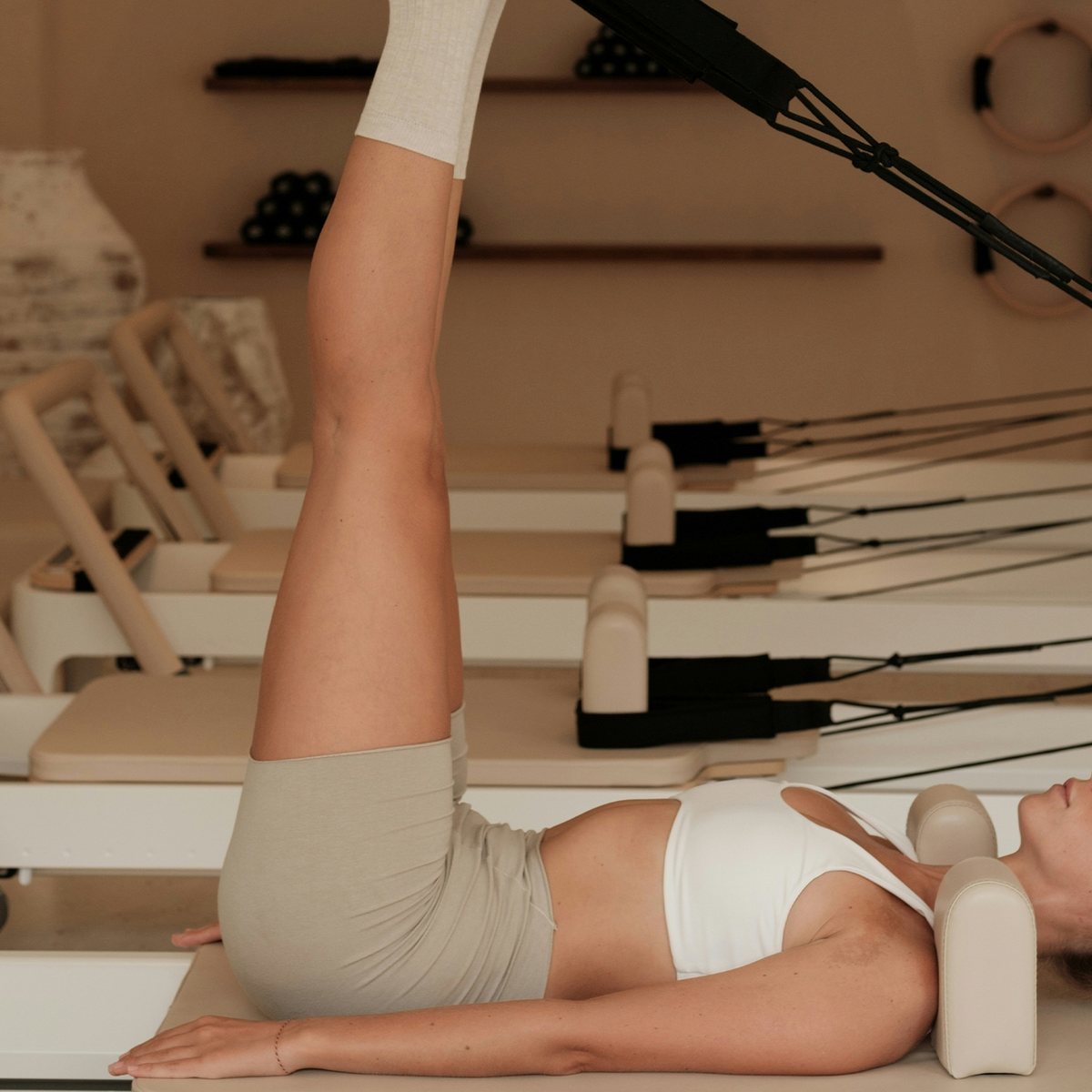
Give me a cute matching set, a reformer class, a long walk afterwards with a refreshing beverage, and I'm happy. And judging by the current state of the internet, I'm not alone. Pilates has gone from something your mom did in a Jane Fonda-adjacent leotard to one of the most aspirational forms of movement on the internet. The “Pilates princess” phenomenon is going strong.
Honestly? I get the hype. Pilates is low-impact, challenging without necessarily feeling punishing, incredibly good for body awareness and core strength, and — perhaps most importantly — it's an exercise people actually seem to enjoy. That matters. Because the best workout is not the one that looks impressive or challenging; it's the one you will consistently do.
The question we’ve been seeing everywhere is: Is Pilates enough? My slightly annoying answer is… it depends.
What Pilates does really well
Pilates is genuinely fantastic exercise. It can improve muscular endurance, core strength, flexibility, balance, posture and movement control. Research also suggests Pilates can improve cardiorespiratory fitness, although the quality and quantity of evidence is not nearly as robust as the evidence we have for more traditional aerobic exercise. (PubMed)
And there's something to be said for the type of strength Pilates develops. You're repeatedly working against resistance — whether that's your body weight, springs or reformer equipment — while having to control your position and movement. It is not “just stretching.”
For someone who is currently sedentary, Pilates can be a huge upgrade. For someone who already exercises regularly, it can be an excellent component of a well-rounded routine.
Where Pilates can fall short
As much as it pains me to say it: Pilates isn't necessarily a complete fitness program on its own.
For general health, the World Health Organization recommends that adults get 150–300 minutes of moderate aerobic activity or 75–150 minutes of vigorous activity per week, plus muscle-strengthening activity involving the major muscle groups on at least two days per week. (World Health Organization)
Pilates can contribute to the strengthening side of that equation, depending on the class, equipment and intensity. But it doesn't necessarily provide enough stimulus for every kind of strength, cardiovascular fitness or bone-loading activity that you might want from a complete exercise routine.
If your goal is to improve mobility, posture, core strength, coordination and general fitness, Pilates may be more than enough to make a meaningful difference.
If your goal is building significant muscle or maximizing strength, however, progressive resistance training is hard to replace. Lifting weights makes it much easier to progressively increase the load placed on a muscle, which is a key driver of strength and hypertrophy.
And if your goal is cardiovascular fitness, you probably want some actual cardio in the mix too.
Do we need to lift weights?
I wouldn't say everyone needs to lift weights specifically.
But I do think resistance training deserves a place in most people's long-term fitness routine.
And here's the important distinction: Pilates is resistance training in a sense, but it isn't necessarily interchangeable with a progressively loaded strength program.
If you're doing reformer Pilates three times a week and progressively challenging yourself, you're absolutely getting a meaningful strength stimulus. But if you're trying to maximize strength or muscle growth, adding traditional resistance training gives you more tools to progressively overload the major muscle groups.
It also gives you something Pilates may not emphasize as much: heavier loading through the skeleton and muscles, which is relevant to maintaining strength and bone health over time, and a key part of the longevity conversation nowadays.
My ideal routine
Personally, I think the sweet spot is not Pilates OR weights OR cardio. It's Pilates plus a little bit of everything.
Think Pilates a few times a week, some form of resistance training, regular walking or other daily movement, and enough aerobic activity to challenge your cardiovascular system.
And no, that doesn't mean you need to work out seven days a week.
You can build a very well-rounded routine without making exercise your full-time job. The exact mix should depend on your goals, your schedule, your fitness level and — perhaps most importantly — what you actually enjoy.
So, is Pilates enough? For some people and some goals, absolutely. For everyone and every goal, probably not.
My personal philosophy is to move your body consistently and challenge your muscles to progressively push heavier. I view this as an investment in your future self.
You can be a Pilates princess and lift weights.
Best,
Gabriella





Leave a comment
This site is protected by hCaptcha and the hCaptcha Privacy Policy and Terms of Service apply.