

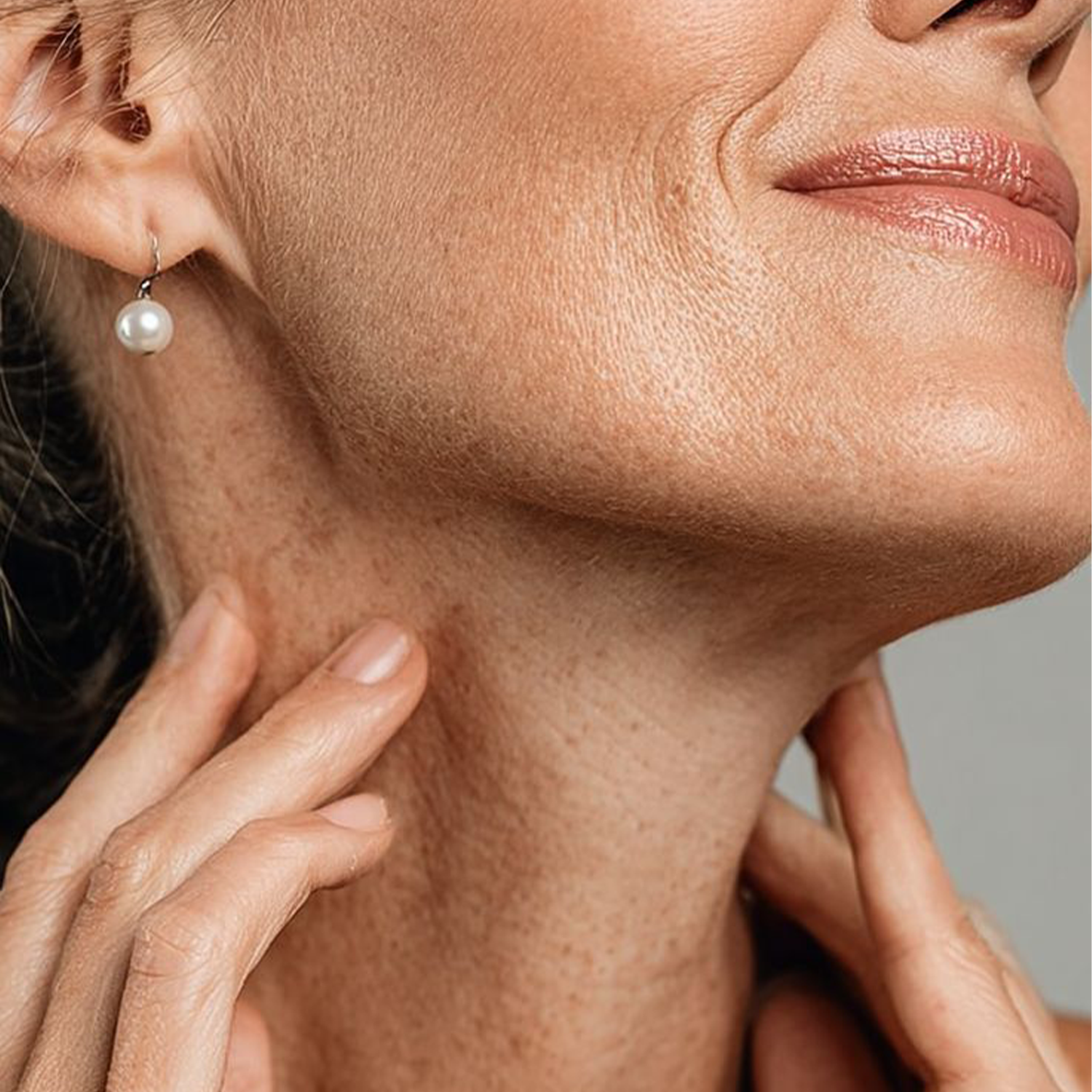
Perimenopause Skin: The Decade Nobody Warned You About
Why does perimenopause and menopause skin feel like it changed overnight? SkinBetter Science expert Elsa Berdugo joined Skin Talks to explain the connection between estrogen and skin – and to introduce the new Mystro Revive Renewing Serum, built for this exact moment.
You wake up one morning, look in the mirror, and something feels off. Your jawline is softer than you remember, your skin feels tight no matter how much cream you apply, lines that were not there last summer are suddenly visible, and the moisturizer that has worked for you for years has quietly stopped hydrating your skin.
Welcome to perimenopause and menopause. You are not imagining it, you are not alone, and we understand it better now than we did even five years ago.
Natascha and I had the privilege of chatting with Elsa Berdugo from SkinBetter Science on the Skin Talks podcast, who walked us through it. She broke down what is actually happening hormonally, what it means for your skin, and what genuinely helps. Here is what stood out.
The "Overnight" Skin Change Is Not Actually Overnight
That sudden shift you feel is not really sudden. It is a gradual decline that reaches a tipping point, usually in your 40s, though Elsa is now seeing women enter perimenopause as early as their late 30s.
Three things happen:
-
Your hormones start fluctuating, which can cause inflammation, sensitivity, laxity, and sometimes adult acne.
-
Your skin's natural oil production drops, so nothing you apply feels like enough.
-
And estrogen, which regulates your fibroblasts (the cells that produce collagen, elastin, and hyaluronic acid), begins to decline.
And when estrogen drops, the entire system that keeps your skin firm and hydrated starts to slow down.
Estrogen Does a Lot More Than We Are Told
Estrogen stimulates collagen and elastin, supports hyaluronic acid production (which is part of why your skin felt plump in your 20s), and helps your skin produce ceramides (which hold your barrier together), and it also reduces inflammatory signals. In a nutshell, it keeps the whole system running.
When estrogen declines, your skin barrier becomes more compromised. Pollution, UV, and irritants penetrate more easily, and inflammation increases. You might notice redness, rosacea, melasma, dryness that does not respond to your usual products, or breakouts that do not make sense at 48. Much of it traces back to this one hormone.
The Average Woman Sees a Doctor Seven Times Before Menopause Comes Up
Seven times! That is the average number of medical visits before a North American woman ever has “the” conversation with her healthcare provider. Women are going in with joint pain, brain fog, insomnia, weight gain, mood shifts, anxiety… with skin that does not feel like theirs, yet the conversation often still does not happen. Half the population goes through this, and we are only now starting to take it seriously in medicine and skincare.
But that is changing (it’s about time, right?). HRT (hormone replacement therapy) is being re-evaluated with better science behind it. The conversations are finally happening, and brands are starting to formulate products for this stage of life, which brings me to the next part.
A SkinBetter Science Innovation
SkinBetter Science recently released Mystro Revive Renewing Serum, and it is one of the first products we have seen designed specifically for women in their 40s and 50s+ experiencing estrogen decline.
Mystro is built around supporting the different pathways in the skin. Revive is the version formulated for the rapid decline that occurs during perimenopause and menopause. It contains nine plant adaptogens to help with chronic inflammation, four fatty acid adaptogens to help rebuild the lipid barrier, SkinBetter's TAP technology to support your skin's own antioxidant production, plus astaxanthin, vitamin E, and superoxide dismutase. Two types of ceramides, cholesterol, and niacinamide, round it out for barrier repair.
The part of Elsa's share that we found very interesting was the clinical data: Revive was tested against estradiol (topical estrogen) and, in many cases, performed comparably in hydration and barrier repair. It is not an estrogen replacement; however, it works alongside HRT or as an option for women who cannot use hormone therapy.
What You Should Be Doing, Whatever Decade You Are In
We agreed on this important point: How well your skin handles perimenopause has a lot to do with what you did with it in the years before.
If you're new to SkinBetter Science (one of the most beloved brands on BSE), here are the basic steps:
-
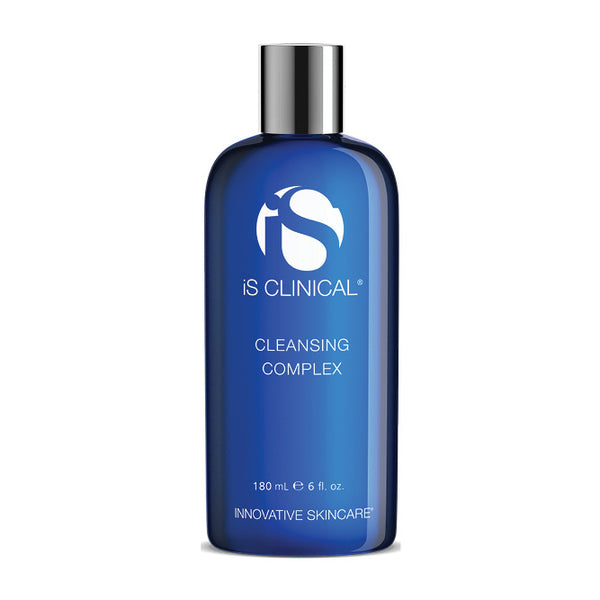
A gentle cleanser in the morning and evening
-
A vitamin C serum in the morning.
-
A retinoid at night (Alpharet Overnight Cream is the one my sensitive skin tolerates well).
-
A moisturizer in the morning and evening that suits your current skin type.
-
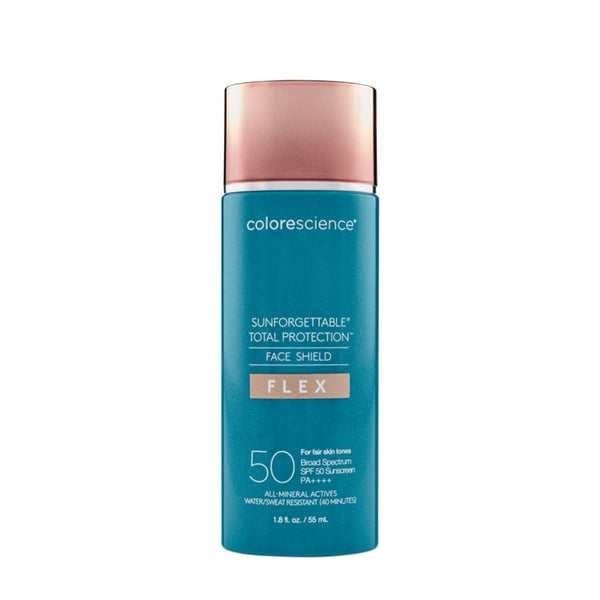
SPF in the morning (which every guest on this podcast has agreed is the single most important step in a solid skincare routine).
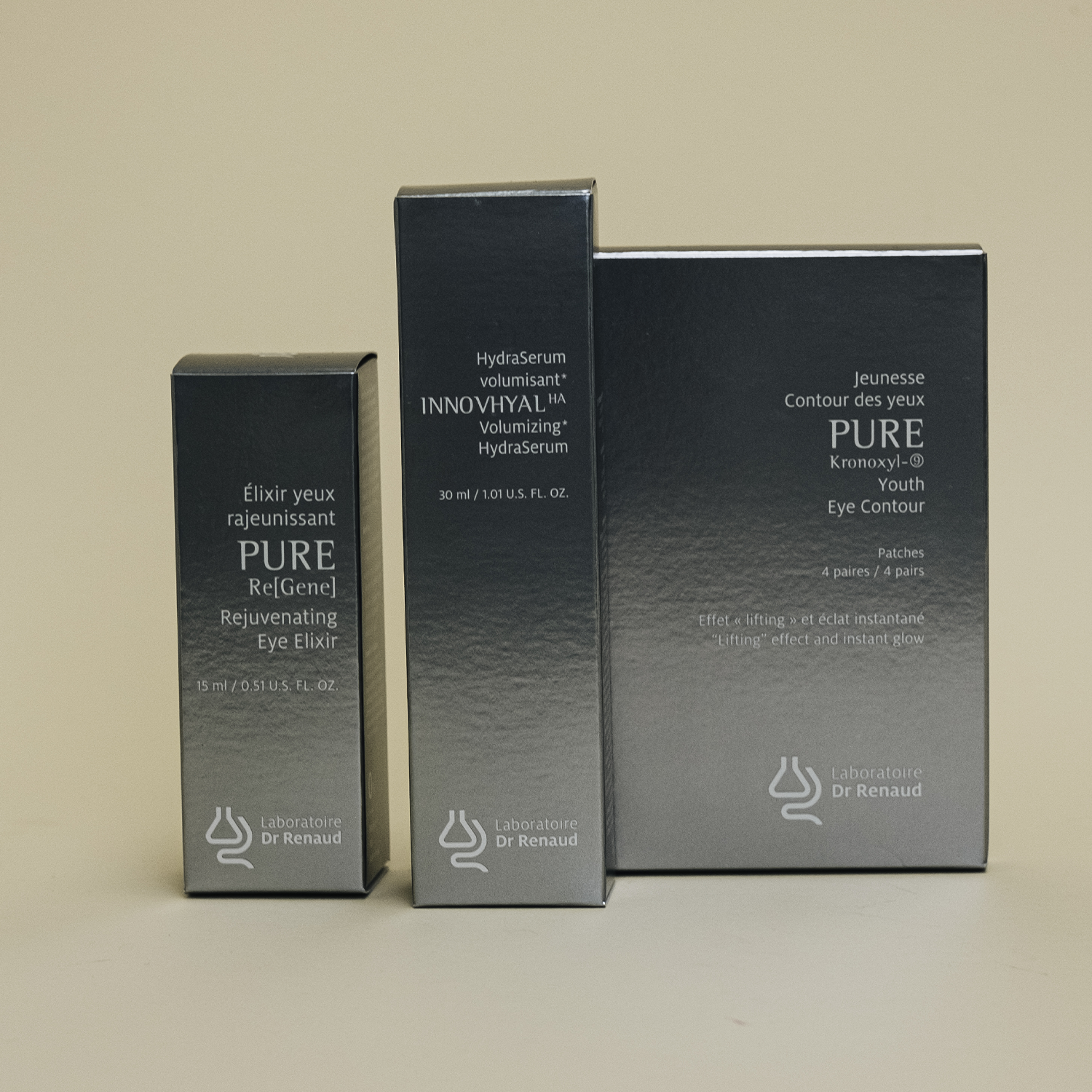
If you are in your perimenopausal/menopausal years, add Mystro Revive Renewing Serum. Layer it after your vitamin C (step 2) and before your moisturizer (step 3). Use it morning and evening. Bonus: Here are my faves for the eyes and neck.
Last but not least, another thing Elsa said in that episode stayed with us: women who handle perimenopause and menopause best are not the ones with the most expensive products or the best genetics. They are the ones who paid attention early in life, built healthy daily habits before they needed them, and, when the change finally arrived, met it with curiosity rather than panic.
That is what we are trying to do with Skin Talks. We provide you with knowledge and information so you can be one of those people who love to learn and share with their loved ones. Enjoy the full episode.
Until next time,
Beate

Leave a comment
This site is protected by hCaptcha and the hCaptcha Privacy Policy and Terms of Service apply.