

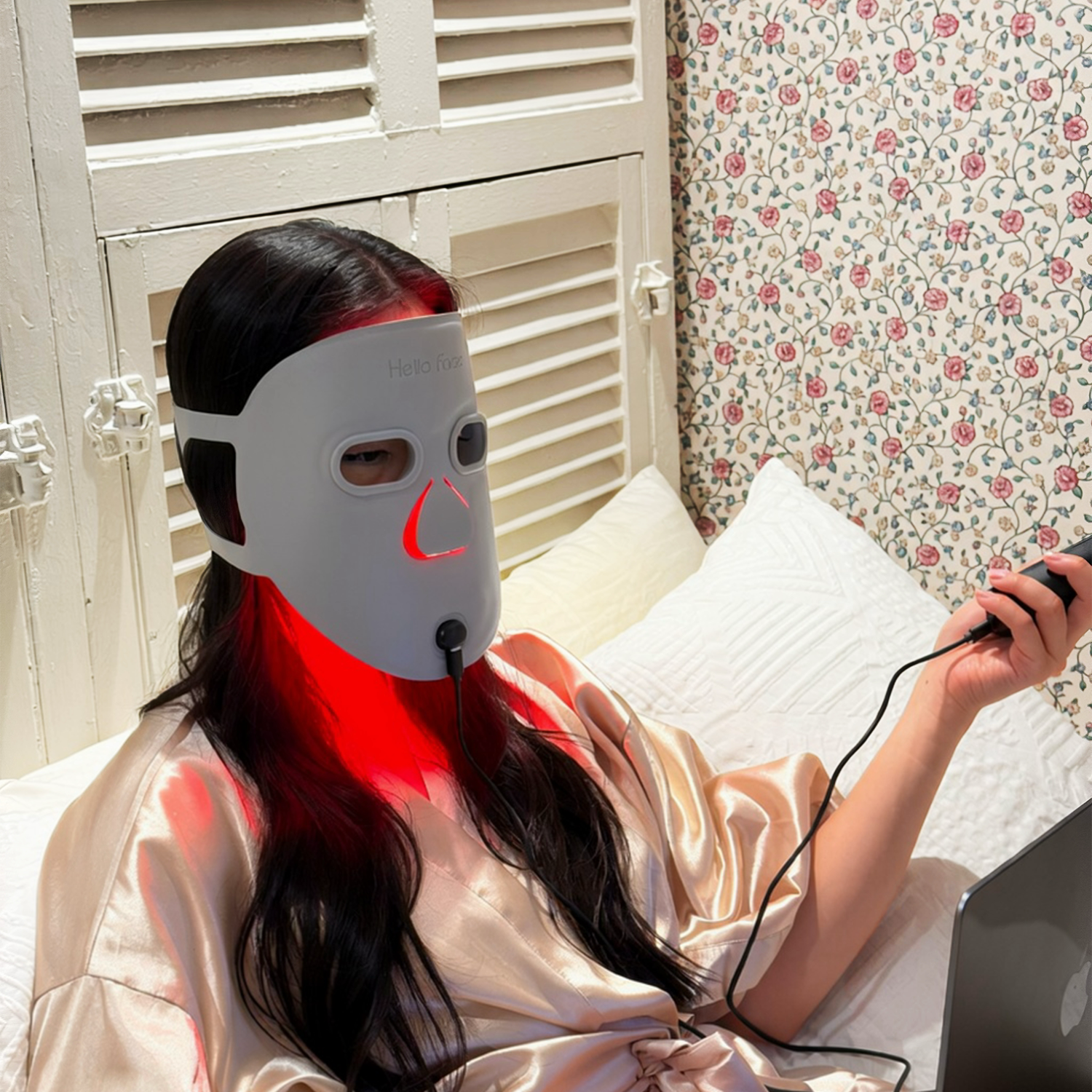
LED Light Therapy: What It Actually Does for Your Skin
Everyone is wearing a glowing mask. Very few people understand why.
LED light therapy has moved from the treatment room to the living room, and it happened quickly. What used to be a machine on a rolling arm, operated by a trained professional, is now something you can wear on the couch while scrolling on your phone.
That is genuinely exciting, but it is also where the confusion begins. Half of what you read online treats LED light therapy as a miracle, while the other half dismisses it as an expensive novelty. Neither is accurate, and you deserve a clearer explanation and more information before you spend your money.
So let's break it down together.
What LED light therapy actually is
LED stands for Light Emitting Diode. It is a non-invasive, UV-free treatment that uses specific wavelengths of light to support the skin’s natural processes.
This is the part that matters: LED is not a laser, and it is not IPL. Nothing is wounded, resurfaced, or removed. There is no downtime or recovery, because there is nothing to recover from. Different colours of light penetrate to different depths of the skin, and once they arrive, they encourage your cells to do more of what they already know how to do.
That gentleness is the whole appeal. It is also why LED asks for consistency rather than extremes or drama. You will not see a transformation after one session. But you will see a gradual, cumulative change over weeks, which is how most good skincare works anyway.
What each mode is doing
Our Hello Face At-Home LED Mask uses four settings, each with a specific purpose:
-
Red: The one with the strongest research behind it. Red light penetrates deepest and supports collagen production and skin rejuvenation, making it the priority setting for firmness, fine lines and overall radiance.
-
Amber: Works closer to the surface. This is the gentlest of the four and the one to reach for when skin looks tired, dull or uneven.
-
Blue: The setting for congested, blemish-prone skin. Blue light works at the surface, where that kind of congestion begins.
-
Mixed: All three together. This is a sensible default if you are not targeting a specific concern, and it is where most people settle once they have found their rhythm.
What LED can do and what it cannot
We believe in being honest about this because managing expectations is part of good skincare education.
What the research supports:
-
Calming the appearance of redness and inflammation
-
Supporting the skin’s healing and repair
-
Helping blemish-prone skin look clearer and more balanced
-
Modest, gradual improvement in fine lines, firmness and tone
What it will not do:
-
Replace a professional treatment, such as a peel or collagen induction therapy
-
Fix a routine that is not working in the first place
-
Deliver dramatic results overnight, no matter what the advertisement suggests
-
LED is a supporting player. It works beautifully alongside a well-built routine and professional care. It cannot carry the whole thing on its own, and any brand telling you otherwise is selling rather than educating.
How to actually get results from your mask
This is where most people lose the value of their investment, so please read this section carefuly:
-
Always start with clean, bare skin. No serum, no oil, nothing underneath. Product on the surface scatters light before it can do anything useful. Apply your actives afterward.
-
Ten to twenty minutes per session. Longer is not better.
-
Three to five sessions per week. Consistency matters far more than duration. Ten minutes on four ordinary weeknights will always outperform one long session a month.
-
Wear the eye protection. Every time.
-
Give it eight to twelve weeks. Skin works on its own timeline, and there is no rushing it.
-
Ask before layering it with professional treatments. Timing around resurfacing matters.
Please remember, a device is a tool, not a strategy. It works when it fits into a routine that already makes sense for your skin, and that is where professional guidance is worth far more than any gadget.
If you are not sure whether LED is right for you, book a consultation or speak with an esthetician or specialist who can properly assess your skin and tell you honestly whether this is the right investment.
We invite you to explore Hello Face, along with our favourite tools.
Until next time,
Beate von Huene



Leave a comment
This site is protected by hCaptcha and the hCaptcha Privacy Policy and Terms of Service apply.